Looking for a way to make science exciting for your 8-12-year-olds? Fun science experiments for kids are the perfect solution! They transform household items into amazing educational experiences. From creating mini-volcanoes to launching balloon rockets, these activities not only entertain but also teach essential scientific concepts. Plus, they're a fantastic way to spend quality time with your kids. For more ideas, explore reputable educational resources and platforms that offer a variety of science experiments for children.
Key Takeaways
- Discover over 10 fun and easy science experiments for kids aged 8-12.
- Use everyday household items to make these activities both accessible and affordable.
- Each experiment includes safety tips to ensure a secure and enjoyable environment for your young scientists.
What Are Some Easy Science Experiments for Kids?
When it comes to fun science experiments for kids, simplicity and education go hand in hand. These activities not only spark curiosity but are also an excellent way to introduce scientific principles without overwhelming your child.
Vinegar and Baking Soda Volcano
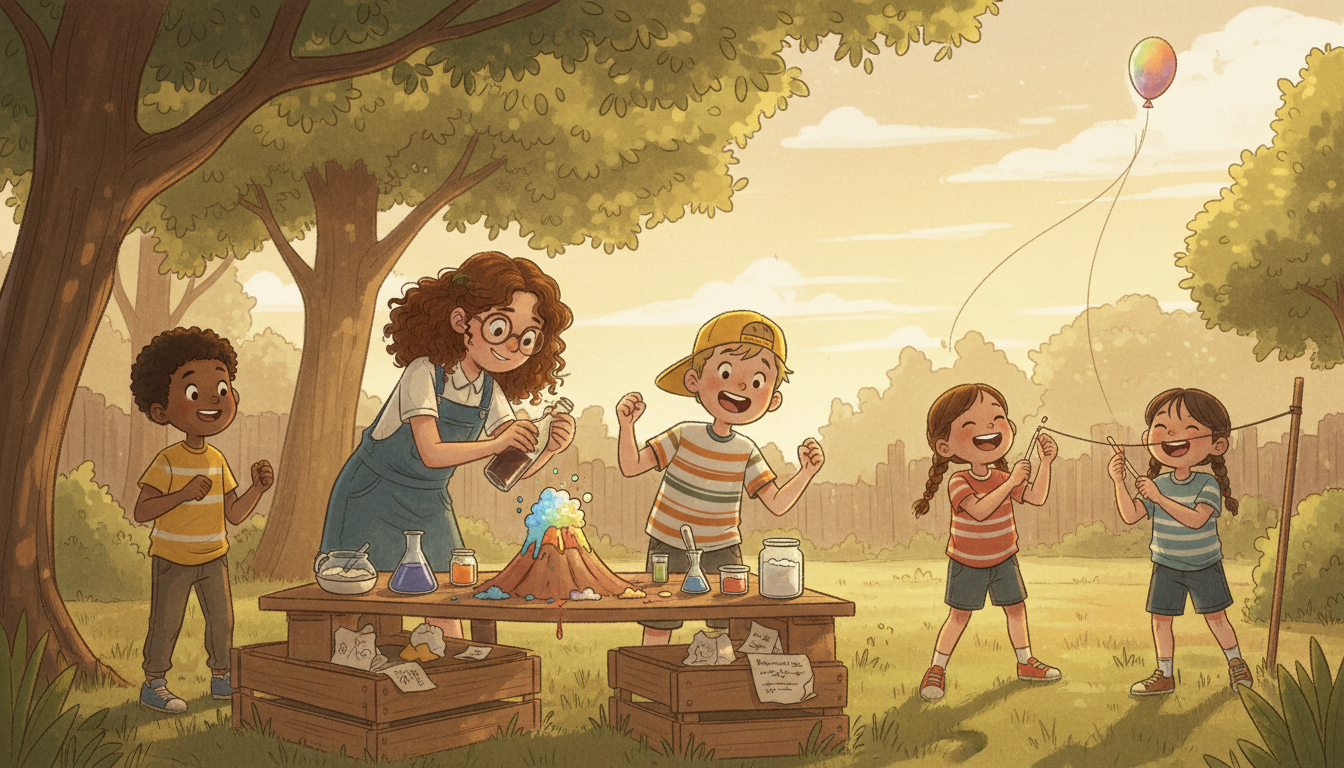
A classic that never fails to impress! To create a vinegar and baking soda volcano, you'll need a small container, baking soda, vinegar, and red food coloring (optional). Place the container in a mound of dirt or clay to shape your volcano. Fill it with a few tablespoons of baking soda, add a drop or two of red coloring, and pour in the vinegar. Watch as your volcano erupts, delighting your child while teaching them about chemical reactions!
Invisible Ink with Lemon Juice
Unleash your child's inner detective with invisible ink! Squeeze some lemon juice into a bowl and use a cotton swab to write a secret message on paper. Once the juice dries, hold the paper close to a heat source, like a lamp, and watch the message magically appear. This experiment is a fun way to explore basic chemical reactions and the effects of heat.
Can Science Experiments Be Done with Household Items?
Absolutely! The beauty of these experiments is their accessibility, using materials you likely already have at home. This not only keeps costs down but also encourages kids to see science in everyday objects.
Homemade Lava Lamp
Bring the 70s back with a homemade lava lamp! Fill a glass with water, add a few drops of food coloring, and then pour in vegetable oil. The oil will float on top of the water. Drop an effervescent tablet into the mix and watch the bubbles rise, creating a mesmerizing lava lamp effect. This experiment offers a clear visual of density and chemical reactions.
Balloon Rocket
Turn your kitchen or living room into a launch site with the balloon rocket experiment. Thread a piece of string through a straw and tape the straw to a blown-up balloon (don't tie it!). Fasten the string between two stationary objects, and let go of the balloon. As the air escapes, it propels the balloon along the string, demonstrating Newton's Third Law of Motion.
Essential Materials for Experiments
For these fun science experiments for kids, you'll need some basic materials:
- Baking soda
- Vinegar
- Lemon juice
- Food coloring
- Vegetable oil
- Balloons
- String
- Straws
- Paper and pencils
Organizing these items in a box or drawer will make future experiments hassle-free. Consider labeling each item for quick identification.
Safety Guidelines for Kids
Safety is paramount when conducting science experiments. Here are some essential tips:
- Always supervise your children, especially when using heat or chemicals like vinegar.
- Ensure they wear protective eyewear if an experiment involves substances that might irritate the eyes.
- Educate them on the importance of washing hands after handling materials.
These age-appropriate measures ensure a safe and enjoyable learning environment.
Creative Variations of Each Experiment
Encourage creativity by modifying these experiments. For instance, try different food coloring combinations in the lava lamp for a unique effect. Or, experiment with varying amounts of baking soda and vinegar to change the eruption size in your volcano.
Encourage your children to hypothesize and then test their ideas. This not only boosts their analytical skills but also makes the learning process more engaging and personal.
Conclusion and Further Resources
Engaging in fun science experiments for kids fosters a love of learning and curiosity about the world. These hands-on activities teach essential scientific principles in a fun and memorable way. For more experiments and educational content, consider exploring reputable educational platforms where you can find a wealth of ideas tailored to your child's age and interests.
FAQ
What age is appropriate for science experiments?
Science experiments can be tailored for various ages, but those in this article are best suited for ages 8-12.
How do you make science fun for kids?
Incorporating hands-on activities and experiments that spark curiosity makes science fun and engaging.
What are some safe science experiments for toddlers?
Simple and supervised activities like mixing colors or playing with water can be safe for toddlers.
Where can I find science experiment ideas for kids?
Educational apps or parenting publications offer a plethora of science experiment ideas.
Are there any cultural variations in science experiments?
Yes, different cultures may use varied materials or approaches, offering a unique perspective on scientific exploration.
Embark on these experiments today and watch your child's love for science grow!