Understanding and expressing emotions can be challenging for children. A feelings chart for kids can serve as a practical tool to help them articulate their emotions, enhancing emotional intelligence and resilience. Let's explore how you can use feelings charts to nurture your child's emotional development. And if you're looking for more resources, consider checking out Fireside for additional tools and tips.
Key Takeaways
- Feelings charts help children articulate emotions.
- They foster emotional intelligence and resilience.
- Printable and digital options are available for versatility.
What is a Feelings Chart and How Does It Help Kids?
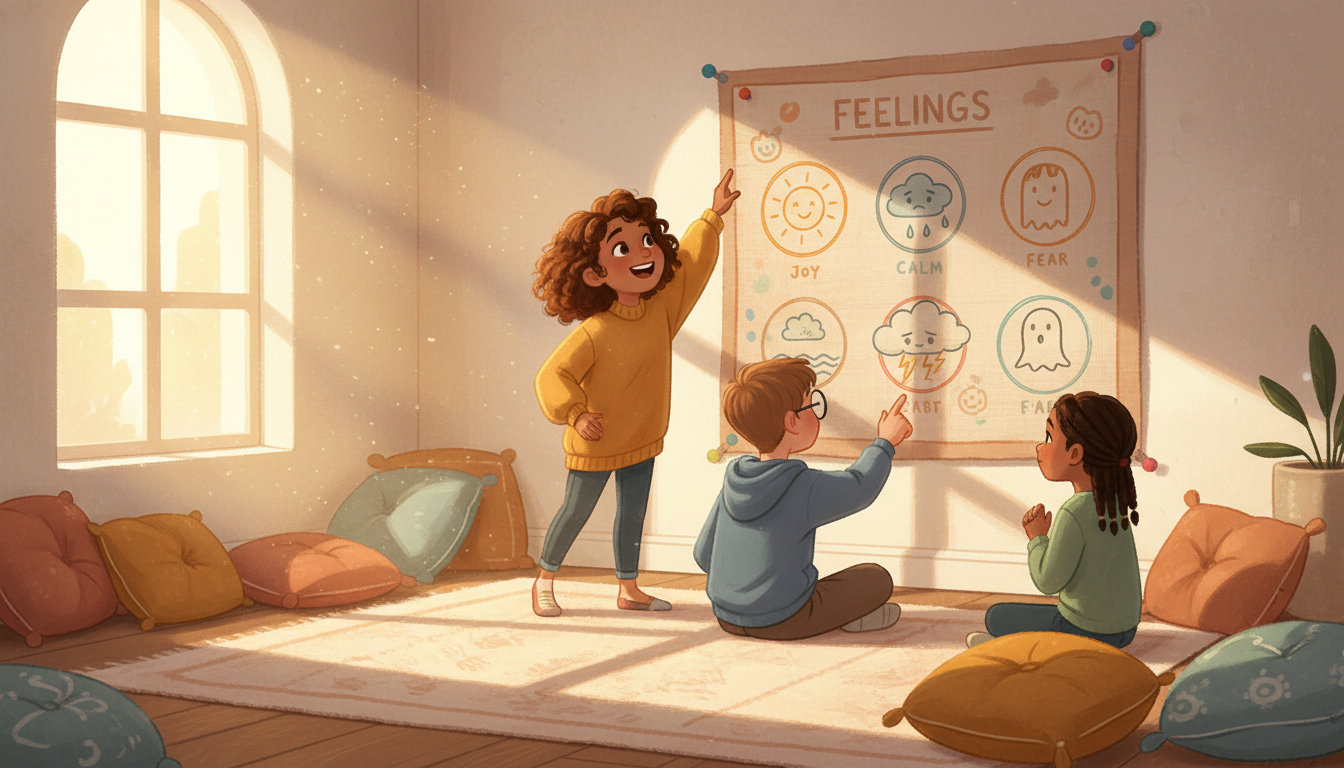
A feelings chart is a visual tool that displays a variety of emotions, often represented by faces or icons. Its primary purpose is to aid children in identifying and expressing their feelings. By showing different emotions like happy, sad, angry, or surprised, it provides a visual aid for children to point to or choose from, which can be particularly helpful for those who struggle with verbalizing their emotions.
Feelings charts can support emotional expression and literacy. They encourage kids to recognize and name their emotions, a fundamental step in developing emotional intelligence. By using a feelings chart, children learn that all emotions are valid and can be expressed safely. This understanding lays the groundwork for better communication and stronger relationships as they grow. The simple act of identifying an emotion on a chart can open the door to meaningful conversations, helping children feel heard and understood.
Benefits of Using a Feelings Chart for Children
Feelings charts enhance children's emotional vocabulary, giving them the words they need to articulate their inner experiences. This expanded vocabulary can lead to more effective communication and a reduction in frustration caused by not being able to express themselves. As children become more adept at naming their emotions, they also develop greater self-awareness and empathy towards others.
Moreover, using a feelings chart supports mental health by providing a tool for emotional regulation. When children can articulate their feelings, they are better equipped to manage them, leading to reduced anxiety and stress levels. This tool can support the recognition of emotions, which is a step towards developing empathy. By regularly using a feelings chart, kids can build resilience, equipping them with the skills to navigate both positive and negative emotions throughout life.
How Can I Teach My Child to Express Their Feelings?
Introducing a feelings chart into your child's daily routine is a great start. You might place it on the fridge and encourage your child to update it each morning or after school. This regular interaction makes emotional expression a natural part of their day, not just an activity for when they’re upset.
Encourage open discussions about emotions by using the chart as a conversation starter. Ask your child questions like, "What made you feel happy today?" or "Why do you think you're feeling upset?" These questions can help children connect their experiences to their emotions, fostering a deeper understanding of emotional cause and effect.
Creating Your Own Feelings Chart at Home
Creating a personalized feelings chart at home can be a fun and rewarding activity. Start by brainstorming with your child about different emotions they experience. Encourage them to think beyond basic feelings like happy or sad, including more nuanced emotions like curious or frustrated.
Next, design your chart on paper or using digital tools. You might cut out pictures from magazines or draw emojis together. Be sure to incorporate cultural and family values, perhaps by including emotions that are particularly significant in your family culture. This personal touch can make the chart more relatable and meaningful for your child.
Printable and Digital Feelings Chart Options
If you're looking for convenience, there are plenty of printable feelings charts available online. Educational websites and parenting blogs often offer free resources that you can print and use immediately. These ready-made charts are excellent for those who prefer a straightforward approach.
For tech-savvy families, interactive digital feelings charts can be an engaging option. Apps and websites offer dynamic charts where children can click on faces or words to express their emotions. These digital tools often include additional features, such as emotion tracking over time, providing insights into emotional patterns and trends.
Engaging Activities to Use with a Feelings Chart
Make the feelings chart a part of your child's playtime with engaging activities. One idea is to incorporate role-playing games, where children act out scenarios and use the chart to express how they think characters might feel. This not only makes the learning process fun but also deepens their understanding of different emotions.
Storytelling is another effective activity. Encourage your child to tell a story about a time they felt each emotion on the chart. They could draw pictures to accompany their stories, enhancing creativity while reinforcing emotional expression. These activities coupled with the feelings chart can make emotional learning an interactive and enjoyable experience for your child.
Tips for Educators and Parents Using Feelings Charts
For educators, integrating feelings charts into the classroom can create a supportive environment for emotional learning. Consider starting the day with an emotion check-in using the chart, allowing students to share their feelings in a safe space. This practice can enhance classroom cohesion and empathy among students.
Parents can support emotional learning at home by modeling the use of the feelings chart themselves. Show your child that you also reflect on your emotions by talking about your day and pointing to the chart. This demonstration normalizes emotional expression and encourages children to do the same, fostering an open emotional dialogue within the family.
Conclusion
Feelings charts are powerful tools for helping children navigate their emotions. By fostering emotional literacy, self-awareness, and empathy, these charts play a vital role in your child's emotional development. Encourage ongoing use of feelings charts to support your child in building a strong emotional foundation.