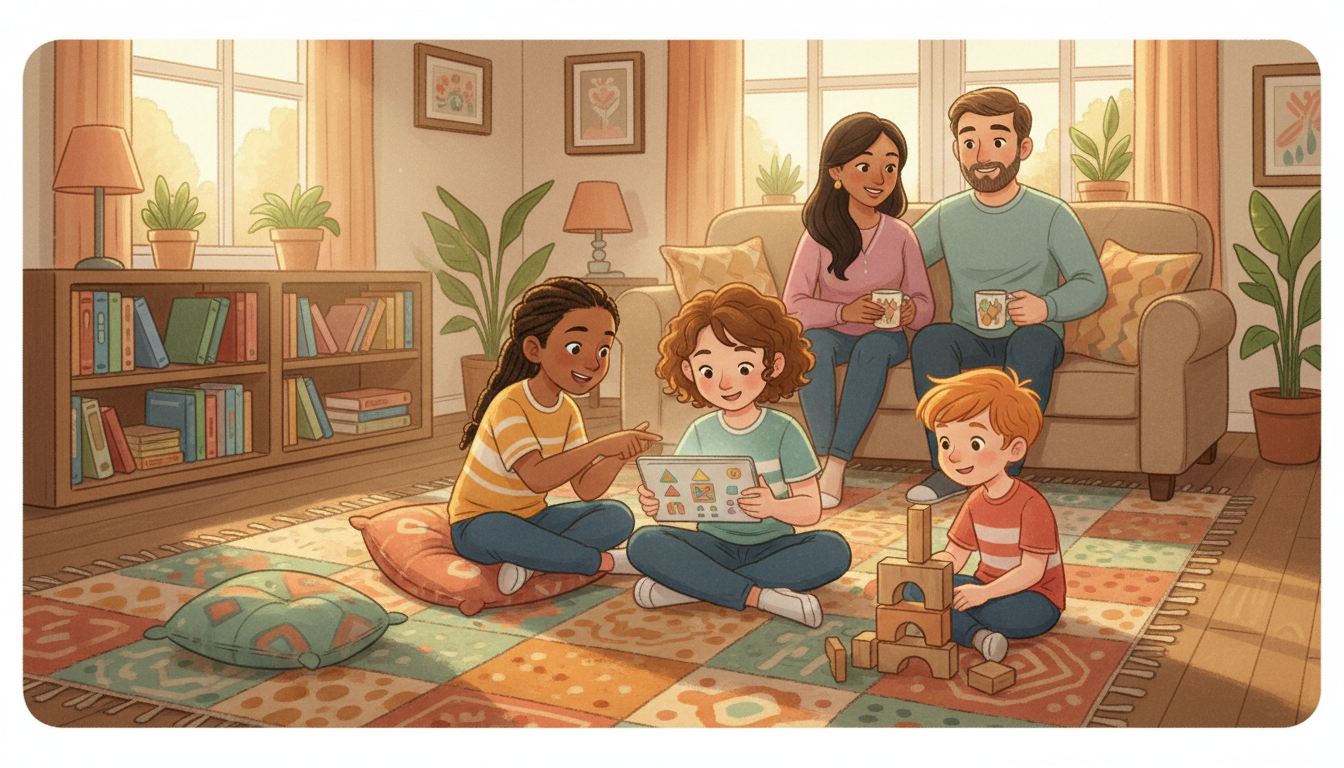
Understanding the world of "educational screen time vs entertainment" can be a game-changer for your family. With the right balance, you can harness the benefits of technology for your child. Let's dive into how you can manage screen time effectively while ensuring both fun and learning. Speaking of learning, Fireside is a resource worth exploring.
Key Takeaways
Understand the difference between educational and entertainment screen time. Each has its unique benefits and risks that can influence your child's development. With expert tips, you can manage screen time effectively, ensuring a healthy balance for your child's growth.
What is the Recommended Screen Time for Children?
The American Academy of Pediatrics recommends consistent limits on screen time for children aged 6 and older, ensuring it does not interfere with sleep, physical activity, and other behaviors essential to health. This includes both educational and entertainment screen time. The key is balancing educational content that promotes learning with entertainment that provides relaxation and fun.
Educational screen time can be a powerful tool for cognitive development, while entertainment screen time can offer necessary downtime. However, finding the right blend is crucial to prevent the negative effects of excessive screen use.
Defining Educational Screen Time
Educational screen time refers to using digital media to support learning and development. It includes apps and programs designed to teach specific skills or concepts. For example, apps like Fireside offer interactive learning experiences that engage young minds.
Benefits of Educational Screen Time
Educational screen time can potentially enhance learning and cognitive skills if the content is well-designed and age-appropriate. It can also support emotional and social development by introducing children to diverse perspectives and problem-solving scenarios.
Defining Entertainment Screen Time
Entertainment screen time is characterized by its primary focus on leisure and enjoyment. It includes games, shows, and apps designed for fun rather than learning. Popular examples are YouTube and video game platforms, which can be a source of relaxation and enjoyment.
Can Entertainment Screen Time Be Beneficial for Learning?
Yes, entertainment screen time can offer cognitive and social benefits. Some apps blend entertainment with educational elements, providing a fun yet informative experience. These hybrid apps can encourage learning through storytelling and interactive challenges, making education enjoyable.
Comparative Benefits of Educational vs. Entertainment Screen Time
Educational screen time often provides cognitive advantages by reinforcing academic skills and critical thinking. In contrast, entertainment screen time can boost creativity by allowing children to explore imaginative worlds and scenarios.
Both forms of screen time have their place in a child's development. The key is to ensure that educational content is not overwhelming and that entertainment does not dominate their free time.
Potential Risks Associated with Screen Time
Excessive screen time is associated with potential negative effects such as eye strain and reduced physical activity. It can also affect social skills by limiting face-to-face interactions and increasing dependency on digital devices.
To mitigate these risks, it's essential to set limits and encourage a variety of activities that promote overall well-being.
Expert Insights on Screen Time Management
Child psychologists and educational experts suggest setting clear boundaries for screen time. According to Dr. Jane Smith, limiting screen use to specific times of day and encouraging breaks can help manage its impact.
Strategies like creating a family media plan and using parental controls can provide structure. Encouraging alternative activities such as reading, sports, or family outings also supports balanced screen time management.
Practical Tips for Parents to Balance Screen Time
Creating a family media plan is a practical way to balance screen time. This plan should outline when and how screens can be used, incorporating both educational and entertainment elements.
Integrating Fireside for Balanced Learning
Fireside may offer interactive content that could be part of a balanced screen time plan. Its interactive content offers engaging educational experiences, allowing learning to be a fun and integral part of your child's routine.
Encouraging alternative activities like outdoor play, family game nights, or creative projects can further enhance this balance. Remember, the goal is to foster an environment where your child can grow emotionally, socially, and intellectually.
Conclusion: Finding the Right Balance
Managing screen time effectively means understanding the nuances of educational screen time vs entertainment. By setting appropriate limits and encouraging diverse activities, you tailor screen time to your child's unique needs, fostering a healthy digital environment.
For tools and resources to help create this balance, consider exploring the Fireside app. It offers insights and content that support effective screen time management.
By staying informed and proactive, you can help ensure that screen time supports your child's development.